A conversation about PTSD, marriage, healing, and refusing to quit.
Introduction
This series is meant to make room for honest, human conversations with people who have lived through trauma and continued forward in their own way. The goal is not to sensationalize anyone’s pain or turn survival into a performance. It is to hear from people as whole human beings: what they have carried, what helped them keep going, what healing has looked like, and what they wish others understood.
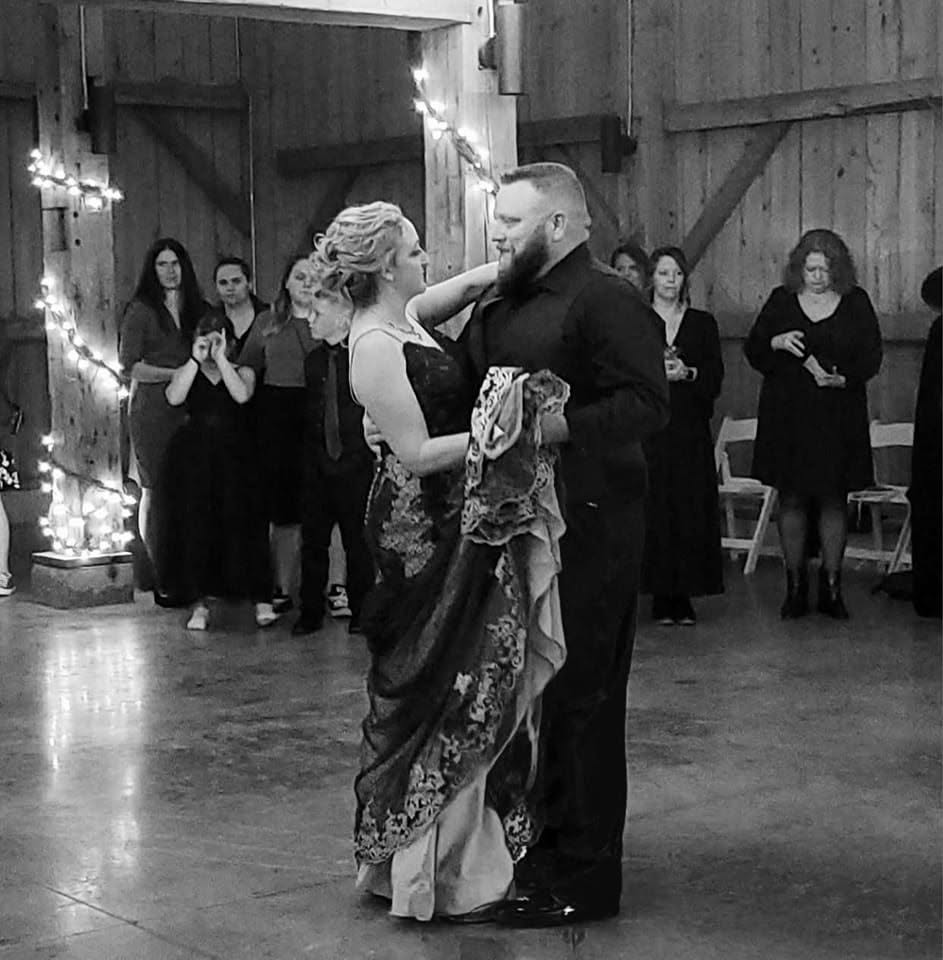
For Part 1, I’m speaking with Michael Conley about PTSD, service, law enforcement, anger, survival, fatherhood, and the quiet life he has worked to build. This conversation also includes Lindsey, his spouse, whose perspective shows what trauma can look like inside a marriage: trust, communication, boundaries, humor, patience, and the daily choice to keep learning your person.
Michael’s Story
Content note: This interview discusses PTSD, suicide, military and law enforcement trauma, death, anger, and strong language.
Interviewer’s note: You are welcome to pause, skip, reword, or redirect any question at any time. The purpose of this conversation is to honor your story without pressuring you to share anything that does not feel right.
Jarod: What would you like me to know about you and your journey before we talk about trauma?
Michael: One important thing I want people to understand is that PTSD is not always caused by one single event. Sometimes it is the accumulation of many things over many years. It may not be one accident or one moment that causes it.
The way I think about it is like a bathtub. When my bathtub fills up, my body has the same chemical stress response. For me, that bathtub might be filled by dead bodies or getting shot at. For someone else, it might be a bad boss, being yelled at, or living through something other people may not immediately recognize as trauma.
The response is still valid. Your situation does not have to look like someone else’s for it to matter. If your body and mind are reacting, that is real, and it is important to seek help. It is also your responsibility to seek help. That responsibility cannot fall entirely on your spouse or the people around you.
Jarod: How is it for you right now, talking about what happened?
Michael: It depends on the day. Today, I feel good, so it is easier to talk about it. There are other days when I do not want to talk about it or deal with it at all.
Jarod: What do you need right now to feel comfortable as we continue?
Michael: I feel good right now. Today, I hit all the things I needed to do to feel good. The days when I have nothing to do, when I have to sit still and relax, are usually the days when my anxiety goes up. That is when I have time to go through my files.
Jarod: Has anyone ever helped you put a name to what you experienced, such as a trauma-related diagnosis? Only share what feels comfortable.
Michael: When I first got out of the Army, I sought counseling because I finally had time to think. I went through a couple of therapists, and I learned that it is important to find one you actually like and feel comfortable with.
At that point, I was dealing with a lot of hypervigilance. I was remembering license plates and tracking details in ways that did not feel normal. When I was officially diagnosed with PTSD, I called my dad and told him. His response was, “Welcome to the party, pal.”
When I got into law enforcement, I continued seeking treatment. By then, it was just a known thing in my life that I had PTSD.
Jarod: When you think about your story, what feels most important for people to understand?
Michael: The most important thing I want people to understand is that your mental state is your responsibility. Your brain can play tricks on you, and the way you feel in a moment may not always reflect reality. But it is still your responsibility to get checked out and seek help.
You could interview me, then interview a Navy SEAL with 20 years of combat experience and then interview a woman who survived an abusive relationship. We may have very different stories, but we can all have PTSD. We can all have the same chemical reaction in our bodies. We all need help, and it is our responsibility to seek that help.
People often assume the person at highest risk is the one with the most obvious trauma history, but that is not always how it works. Sometimes it is the young troop living in the barracks, away from home for the first time, who is in danger and does not know how to ask for help. The person who has deployed or been through divorce may have already learned to reach out, while someone without those experiences may get criticized or may believe they do not need help. That is why it matters to take your mental health seriously before it gets to that point.
Jarod: How has this experience changed your life, including the way you see yourself?
Michael: From a young age, I saw a lot of bad in the world. The day after my dad was shot while working as a police officer, my grandpa died by suicide. That is a lot to process as a kid.
It took time for me to see the good again. I had to put in the work to get there.
Jarod: Have you ever looked back and realized that certain parts of your personality or reactions may have been shaped by trauma, even though you once thought they were just “who you are”?
Michael: Oh, fuck yeah. Sometimes it feels like most of my personality is a facade, and underneath that there is a lot bubbling up. I am constantly aware of what I am about to say and how it might come out.
There are moments when I feel like, if I said exactly what was in my head, people would be shocked. So I have learned to pause, filter myself, and be careful with my words. That awareness is part of how I manage it.
Jarod: Has your trauma changed the way you respond when you feel like you’re losing control of a situation?
Michael: Exactly what I said before. I am conscious enough to know that if I say what I want to say, it is going to be really, really bad. So I edit my response.
I am constantly aware of my knee-jerk reactions, and I know people are going to be like, “Oh, he’s pissed.”
Jarod: What role has anger played in your PTSD, and what did it take to understand what was underneath that anger?
Michael: Back when I was in law enforcement, there were a couple of times when I had complete control over the situation and the person, and I still spoke to them with nothing but anger. I saw their reaction, and those reactions were scarring too. Those reactions were coming from death and despair instead of authority and care.
There was this guy in the back of the hospital sexually harassing the nurses. He had already been trespassed from several hospitals. We trespassed him too. He was there for mental and emotional reasons, and then he came walking back in through the door, so we threw him out one more time.
Another guy walked up and said he was just trying to get this guy help. I lost my mind. I started yelling at him. He pulled out his military ID, and I lost it even more. I yelled at him and threatened to take him to jail. He was just trying to talk to me and get his friend help. His friend was doing things that were not okay, and I did not do anything wrong, but I could have handled it differently. Because of my anger, I yelled at him and threw him out.
I think about that one thing often. It is always the small details that you remember. I can describe the challenge coin in detail, but I cannot remember what the guy looked like.
Jarod: What barriers or challenges have been hardest to work through?
Michael: I have been on a personal healing path for as long as I can remember. Those challenges have constantly changed.
I remember, for the longest time, I kept having dreams of all the people I hurt as ghosts. Not how they looked in the moment, but how they might look now. That was right after I left law enforcement. It took a long time to get over that. Melatonin helped.
The challenges continue to change as I move forward. When I left the military, it was hypervigilance. I was remembering license plate numbers for weeks. I do not know why I did that, but it was something I did.
When I was in law enforcement and going through a divorce, there was this weird phenomenon with officers going through divorces where they put themselves in more dangerous situations with no regard for safety. I was putting myself in those situations. Luckily, the people to my left and right caught on to what was going on and snatched me up quickly.
Jarod: What did getting through each day look like at first, and what does it look like now?
Michael: It’s weird, because I think my PTSD started when I was a kid. I think I had it when I joined the military and when I went into law enforcement. My bathtub was already getting full. I was just a kid, and I didn’t understand any of this.
Some days I feel like I am falling. Some days I feel like I am drowning. Other days I feel fine. It depends on the circumstances, and it depends on the day.
Jarod: What does living with trauma look like when you’re still working, leading, parenting, and trying to function like everything is normal?
Michael: It is like you are wearing a mask. It is like you are not being yourself, and that is a really, really good thing. That is 100% it. It is like you are wearing a mask.
Jarod: Has being the person other people depend on ever made it harder to admit that you were struggling?
Michael: Yup. Yup. I got really, really good, really quick in law enforcement at sitting with someone on their worst day and letting them dump their trauma on me. My first year, I took it to heart.
After that, I learned to take it on and then immediately dump it to protect myself. I still listened to people and helped them, but I also protected myself. So in my mind, I didn’t need help. That was the wrong decision. That was stupid.
In the career I was in, asking for help immediately put you on a blacklist. They pulled you from shift because you were going to counseling.
Jarod: How has becoming a parent changed the way you understand, carry, or respond to your own trauma?
Michael: The cycle of abuse. My dad had trauma. My dad had PTSD. My dad treated me a certain way. I have trauma. I have PTSD. But I can change the way I treat my kid. I can explain to my daughter that there are things out of her control that are happening and that they are going to affect her, but she can deal with them and make them better. I can teach her about the cycle of abuse.
Jarod: Have there been moments when you realized you were stronger than you knew?
Michael: There have been so many moments where what I thought I was capable of was nothing compared to what I had to do to complete the mission and come home alive.
I didn’t think I could handle a dead baby laying in the middle of the road, and then the next call involved that very situation. I can handle that now. When shit goes too far, when everyone is looking for someone to step up and do something, you have to handle it.
When you think you are only so strong, you have to be stronger to address whatever issue comes your way. It sucks. I can’t tell you how many times I have received a call and thought to myself, “Oh, that is a bad situation. Someone should handle that,” and then realized I am that person and immediately called dispatch to let them know I was responding.
Jarod: What has healing looked like for you up to this point?
Michael: I have gone through drastic measures to create my life in the vision of how I want it to be: farmhouse, old truck, beautiful wife, lazy dog, two healthy kids. What more could you want?
If you can take out the other stressors around the trauma, the trauma is easier to handle. I have a beautiful life. I am not currently taking medicine or going to therapy, but because of the way I am living my life, I am healing. The world isn’t so bad.
Jarod: When you look back at where you started, what helps you recognize the progress you’ve made in your healing?
Michael: Oh, fuck. I feel like I haven’t moved at all. I feel like I haven’t done shit with my life. I am in a continuous chase to do better.
Obviously, I know that isn’t accurate, but that feeling keeps me on the path to working it.
Jarod: Is there a difference between surviving something and actually recovering from it?
Michael: Yeah, 1000%. Fuck yeah. My dad is the perfect example. My dad survived the shooting, but he never recovered from it. Every day, the memories from that shooting put him right back there. He was stuck on August 18, 2004.
Jarod: What helps you feel understood, safe, or grounded right now?
Michael: Bourbon night. Next question.
Jarod: What have people said or done that did not feel helpful, even if they meant well?
Michael: I don’t like the dog and pony show. Like at a baseball game where they recognize the veterans and say, “If you are a veteran, please stand up.” Fuck you, no thanks.
I do not want the recognition. I do not like the dog and pony show. I am sure there are some people out there who appreciate it, but I am not one of them.
Jarod: How has trauma affected the way you connect with people or build trust?
Michael: There is no trust. The trust isn’t there. It is fundamental. You can only do so much. There is no trust.
With my wife, I love her to death. It took years to trust her exceedingly, to trust her completely. It took years to let her into that circle. It took a lot of us just not giving up.
It is fucking terrible. I know that is bad. That is a goal line I haven’t addressed yet.
Jarod: What boundaries feel important for you now?
Michael: The whole dog and pony show has bitten my family in the ass. I am at a certain age where I want to collect my family’s accomplishments. Now that I am starting to gain traction and starting to get my family’s name recognized, I don’t want my shit fucked with.
Jarod: What do you wish more people understood about trauma, healing, or life after difficult experiences?
Michael: Besides everything I have said already, something new? You are not a weak person for getting help. If you are late to the party, it is going to take a lot of learning to understand what we have been talking about. Unless you put in the effort to learn, you are going to fucking drown.
Jarod: Who or what gives you strength or courage when things are difficult?
Michael: Based on everything I have been through, when push comes to shove, I will be the last one to give up. I know that because of my prior experiences, because I have run headlong into my limitations over and over and over again.
Also, knowing that me being alive brings great pain to other people brings me great joy.
Jarod: Where do you find hope today?
Michael: People. People aren’t bad.
I recently talked to multiple NCOs who would have outranked me 10 years ago, and now they look like babies. But seeing them, and seeing how professional they are, gives me hope that there is a future for this nation.
Seeing how everyone, on both sides of the aisle, has reacted to flock cameras gives me hope too. Knowing I can wake up to the sound of birds in the morning, instead of going to bed to them, gives me hope.
Jarod: If you could sit down with the version of yourself who hadn’t yet understood how your trauma was affecting you, what would you tell them?
Michael: Stay away from the blondes. Live a healthy life. A quiet life is good.
Jarod: If someone is early in their own healing, what would you want them to hear?
Michael: Don’t fucking quit. Full stop. That’s it. Don’t fucking quit.
Lindsey’s Perspective
Lindsey spoke separately about what it has been like to love Michael through trauma, build a life together, and learn how PTSD can shape communication, trust, parenting, boundaries, and partnership.
Jarod: What would you like readers to know about Michael as a whole person, beyond what he has survived?
Lindsey: The first thing is that, because of the way Mike acts, people sometimes think two things: one, that he is lying, and two, that he is dumb. He is neither.
It happens because of the way he explains the things he has lived through. He tells these fantastical stories that sound like he made them up, but he didn’t. People don’t believe him, and then they dismiss him.
Trauma made him do two things. It made him forget a lot of things, but it also made him learn a lot and analyze a lot. When people hear his stories, they may miss what he is actually telling them. He is telling you about his experience and what kind of person he is, but you have to pay attention or you will miss it.
Jarod: How has his experience changed the way you understand him?
Lindsey: When we first met, we were both coming off similar experiences, and we jumped right into knowing a lot about each other’s most recent traumas and the bad things that had happened to us.
I had known Mike for a long time. I met him 13 years ago, and I had a Facebook view of his life. I remember congratulating him when he started his law enforcement career, and I saw when he got divorced.
So when we started dating, I already knew some things about him. We also had a lot in common because of the way our marriages had ended. Starting with that shared experience kind of flavored everything else we had going on, because our relationship started with the end of something else.
Jarod: When did you first start noticing his trauma show up in your everyday life together?
Lindsey: When I first started dating him, he was seeing a therapist for his military experience. While he was going through therapy, he talked to me about some of that stuff, so I had a baseline understanding of what he had been through.
I didn’t really have any concept of it before that, because I didn’t grow up around the military or police. He asked me to read a book called On Combat, and he was very shocked that I was willing to read it. He even told his therapist he was surprised I was willing to read it for him.
We both knew we had trauma. I didn’t know mine was PTSD until later, but we both knew we had Stuff with a capital S.
Jarod: What role has anger played in Michael’s PTSD, and what did it take for you to understand what may have been underneath that anger?
Lindsey: It took me a long time to realize that some of his anger is not directed at me when we are fighting. He is pushing me away with his anger, but I eventually understood that the anger is not always about what is happening in that moment.
Once we both decided we were in it together, and that no one was leaving, we were able to start working through it.
Jarod: How has your role in the relationship changed as you’ve gone through this together?
Lindsey: In the beginning, I don’t think I had a good concept of what a healthy relationship looked like, because I had never really seen one or been around one.
Once we got past that stuff, both of our roles became more protective of each other. Now I know Mike has triggers, and we both try to be aware of each other’s triggers and meet each other where we are.
Jarod: What have you learned about loving and supporting someone who has lived through trauma?
Lindsey: I learned that it is not always about me. At the same time, I can make it better, and I can make it worse.
It sounds counterintuitive, but realizing that it is not about me helps me take myself out of it. When I do that, I can support him better and understand that his reactions are not always directed at me.
Jarod: Were there things you had to learn not to say, ask, or assume?
Lindsey: Mike wouldn’t like this, but I will say that I learned not to assume he is fine just because he says he is fine. To be fair, he learned the same thing about me.
He wants to act like it is obvious when he is having a hard time, but I only notice things when they are super obvious. I can usually tell when something is bothering him, but I don’t always know what it is. So I don’t always believe him when he says he is fine, because it will always come out in the end.
Jarod: What helps the two of you communicate when things feel difficult or triggering?
Lindsey: This one is dangerous, because we have done this correctly and we have done this poorly. Sometimes it helps us to text instead of talk. Sometimes we will be sitting on the couch texting each other instead of saying things out loud.
We won’t argue in front of the kids, so texting helps us slow down and work through something without turning it into a fight in front of them.
Jarod: How do you show up for Michael without losing sight of what you need, too?
Lindsey: Courtesy of therapy, I realized I am codependent. I don’t know exactly what that means, and it isn’t always what it sounds like. I am more like a doormat. I will give and give until there is nothing left.
Mike taught me how to take care of myself first and how to voice what I need. He recognizes when I need help, sometimes before I do, but he doesn’t always respond to that unless I ask. He knows a lot about me, and he can see when I need help. But he is not going to jump up and help me unless I actually say it.
So I learned that when I give to other people, it has to be because I want to, not because I am trying to be a martyr or because I am trying to get something out of it.
Jarod: How do you help each other offer support while still caring for yourselves?
Lindsey: We live by the theory that if I can only give 30% today, then he is giving 70%. And if he can only give 30%, then I am giving 70%. We see ourselves as a whole.
Jarod: What are some signs that someone may be giving too much or losing touch with their own boundaries?
Lindsey: A sign that someone may be losing touch with their boundaries is resentment. It shows up as contention that is not proportional to what is actually happening.
It can look like being angry about things that do not make sense or being angry about something they were never angry about before. That is when I know it is my job to ask, “What is this really about?”
Jarod: How do you stay supportive while still feeling like yourself?
Lindsey: I make sure I am doing something because I actually want to do it, not because I feel like I have to.
Unless he is info-dumping about World War II. In that case, I have to, and I do not want to. Battleships are dumb. If you have seen one, you have seen them all. Am I right?
Jarod: When you feel overwhelmed or emotionally worn down, what helps you take care of yourself?
Lindsey: I try not to dump too much on Mike because he is not my therapist, but it does help for him to hear the things I am struggling with. I just do not want him to take those things on to the point where they start weighing him down.
It is nice that he will listen to me, which men can have a really hard time doing because they want to fix everything. I like quiet and aloneness, so when you all do Bourbon night? Heaven. But it can’t be too long. Just a little bit of time by myself.
Jarod: Who or what helps you process your own feelings and stress?
Lindsey: Mike is weirdly good at finding patterns in things. He will notice an overarching pattern in what I am seeing, even when I have not fully connected it myself.
But often, the only way I process things is through writing. I have written about the same thing that happened to me multiple times. I am a writer. I would call myself a writer. I think better when I am writing.
Jarod: Looking back, what support or resources do you wish you had early on being married to Mike?
Lindsey: I wish I had any idea what being in the military was like. I was married to a cop, and they are nothing alike, even though Mike was also a cop.
I also think couples therapy could help us at some point. Right now, though, that is a huge trigger for Mike, and I want us to go into it from a strong base. He has a lot of issues with couples therapy, but I do think it could help us eventually.
Jarod: How do you talk with friends or family who do not fully understand what your household is going through?
Lindsey: I don’t. I really don’t. I am really against people talking badly outside of their relationship. Even if we are having trouble, we solve it ourselves.
Sometimes I will talk to Mike’s friends, but not about specifics. It is more because they understand Mike.
Jarod: What has this journey shown you about your own strength?
Lindsey: It has shown me that I can be in a relationship where two people love each other, and where we can show our kids what that looks like.
It has also shown me that I can continue to show up for someone, and they can continue to show up for me. That is what I want to say. It is about that.
Jarod: What strengths do you see in Michael that he may not always see in himself?
Lindsey: I don’t think he knows how smart he is. He acts like I am the smart one, but he really impresses me. I wish he could see what an asset his mind is.
I think he thinks it is broken, but I think he is really smart and really emotionally intelligent. Some women would be knocking down our door to get that. Honestly, I am really lucky.
Jarod: How has going through this together changed the way you think about love and partnership?
Lindsey: Before Mike, I was alone pretty solidly for six years. Going through this together has made me realize how much fuller my life is with him, and what it is like to be able to lean on someone. I had never really had that before.
I did not think it would be this good.
Jarod: What would you say to someone who just learned their partner is carrying trauma?
Lindsey: One thing Mike says is that you have to keep learning about your person every day. You should be there, be available, and learn as much about your partner as you can.
Pay attention, so you can learn how to best support them.
Jarod: What would you say to other partners or loved ones of trauma survivors?
Lindsey: I would say that trauma is separate from you as a person, and it is separate from your relationship. It might influence you, but it doesn’t have to claim you. It doesn’t have to be your whole thing.
Jarod: What has this relationship taught you about patience, trust, love, or healing?
Lindsey: It has taught me that you can really have a Person. There are people out there who are willing to accept you for who you are.
I don’t love everything that has happened to Mike. It makes me very, very angry. But those things made the version of Mike that I love. I love Mike in his imperfections.
I can see the him that is there. I have told him before that I don’t like how arrogant he is, and he will tell me he is not being arrogant, he is being confident. That allows me to see him in a different way.
Closing Reflection
This conversation does not define Michael Conley by trauma, service, PTSD, anger, or survival alone. It shows a fuller picture: a man who has spent years learning what fills the bathtub, what it means to wear the mask, and what it takes to keep choosing life, family, honesty, and healing.
Lindsey’s perspective adds another layer to that story. Trauma does not stay contained inside one person. It shows up in trust, communication, conflict, parenting, boundaries, silence, humor, and the everyday work of loving someone well. Her answers make clear that support is not about fixing another person. It is about paying attention, learning your person, and continuing to show up without losing yourself.
There is no perfect ending to a story like this. Michael is still healing. Lindsey is still learning with him. But what comes through clearly is that healing can look like a quiet life, a family that keeps choosing each other, and the refusal to quit.
If any part of Michael and Lindsey’s story sounds familiar, let it be a reminder that trauma does not have to be handled alone. Healing can be messy, frustrating, funny, quiet, uneven, and still real. Sometimes it looks like therapy. Sometimes it looks like learning your triggers, asking for help, protecting your peace, or choosing not to quit for one more day.
This conversation is not meant to offer easy answers. It is meant to make room for honesty — the kind that says trauma changes people, but it does not have to claim the whole story.
If you are carrying something heavy, reach out to someone safe. If you love someone who is carrying something heavy, keep learning them. Pay attention. Be patient. And remember that support does not mean losing yourself.
Healing is not a straight line. But it is still possible.


Leave a Reply